Introduction
Email marketing is one of the most effective digital marketing methods for connecting with customers and promoting products or services. It helps businesses communicate directly with their audience, build trust, and encourage people to take action.
However, simply sending emails does not guarantee results. Businesses need effective email marketing strategies to attract attention, increase engagement, and improve conversions
In this blog, we will explore useful email marketing tips, best practices, and techniques to create successful email campaigns.
Effective email marketing strategies help businesses connect with their target audience and achieve better results.
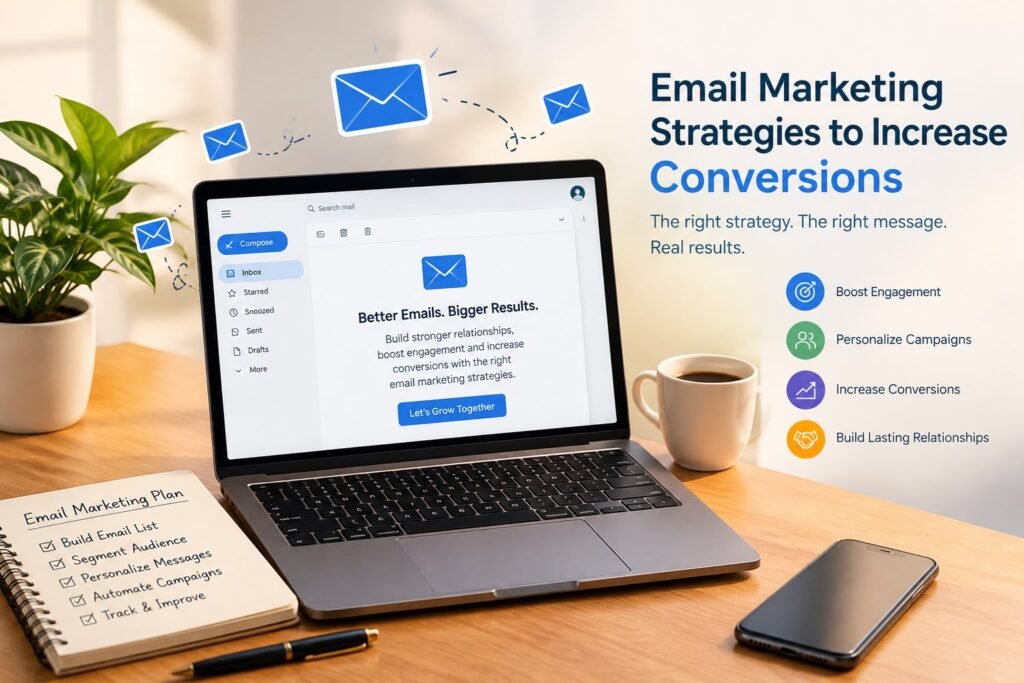
What Is Email Marketing?
Email marketing is a digital marketing technique that involves sending emails to potential and existing customers to share information, promote products or services, and build customer relationships.
Businesses use email marketing strategies to send newsletters, promotional offers, product updates, welcome emails, and special announcements.
Why Is Email Marketing Important?
Email Marketing Strategies offers several benefits for businesses.
- Direct Communication: It allows businesses to communicate directly with their target audience.
- Cost-Effective Marketing: Email campaigns can reach many people without requiring a large marketing budget.
- Customer Engagement: Regular and valuable emails help businesses maintain relationships with customers.
- Increased Conversions: Well-designed emails encourage subscribers to purchase products, register for services, or visit a website.
- Measurable Results: Businesses can track open rates, click-through rates, and conversions to evaluate campaign performance.
Effective Email Marketing Techniques
Create an Engaging Subject Line
The subject line is the first thing recipients see when they receive an email. An attractive and relevant subject line encourages people to open the email.
Write short, clear, and attractive subject lines that match the email content. Avoid confusing words and too many promotional phrases.
Personalize Your Emails
Email personalization involves tailoring email content to the interests and preferences of subscribers.
Businesses can personalize emails using a subscriber’s name, previous purchases, interests, or browsing behavior when appropriate.
Personalized emails help businesses connect with customers by sharing relevant content and increasing engagement.
One of the best email marketing strategies is to personalize messages based on customer interests and preferences.
Segment Your Email List
Email list segmentation means dividing subscribers into smaller groups based on shared characteristics, interests, or behavior
For example, an online clothing store can create separate email lists for customers interested in men’s clothing and women’s clothing.
Segmentation allows businesses to send targeted emails marketing strategies that match the interests and needs of different customer groups.
Use Clear Calls to Action (CTAs)
A call to action (CTA) guides readers to take the next step, such as shopping, learning more, registering, or getting started.
Use clear and visible CTA buttons that match the email’s main objective. Avoid including too many competing calls to action in one email.
Optimize Emails for Mobile Devices
Many people check emails on smartphones. Therefore, mobile-friendly email design is an important email marketing strategies best practice.
Use readable fonts, short paragraphs, responsive layouts, and buttons that are easy to tap. Test emails on different screen sizes before sending them.
Use Email Marketing Automation
Email automation allows businesses to send emails automatically when specific conditions or actions occur.
Common examples include welcome emails, abandoned-cart reminders, birthday offers, and follow-up emails.
Automation saves time and helps businesses deliver relevant messages at the right stage of the customer journey.
Provide Valuable Content
Subscribers are more likely to engage with emails that offer useful information or meaningful benefits.
Share practical tips, educational content, product recommendations, exclusive offers, and relevant updates instead of sending only promotional messages.
Test and Optimize Email Campaigns
A/B testing involves comparing two versions of an email to identify which performs better.
Businesses can test different subject lines, CTA buttons, email designs, and sending times to find what works best. Analyzing campaign results helps improve future emails.
Businesses can improve campaign performance by testing different email marketing strategies and tracking conversion rates.
Email Marketing Best Practices
To improve email campaign performance, follow these best practices:
- Build an email list through permission-based sign-ups.
- Keep email content clear and relevant.
- Maintain consistent branding and messaging.
- Include a clear call to action.
- Avoid sending too many emails.
- Make unsubscribe options easy to find.
- Monitor campaign performance regularly.
- Test emails before sending them to subscribers.
Following these email marketing best practices can help businesses build trust and maintain long-term relationships with their audience.
Common Email Marketing Mistakes to Avoid
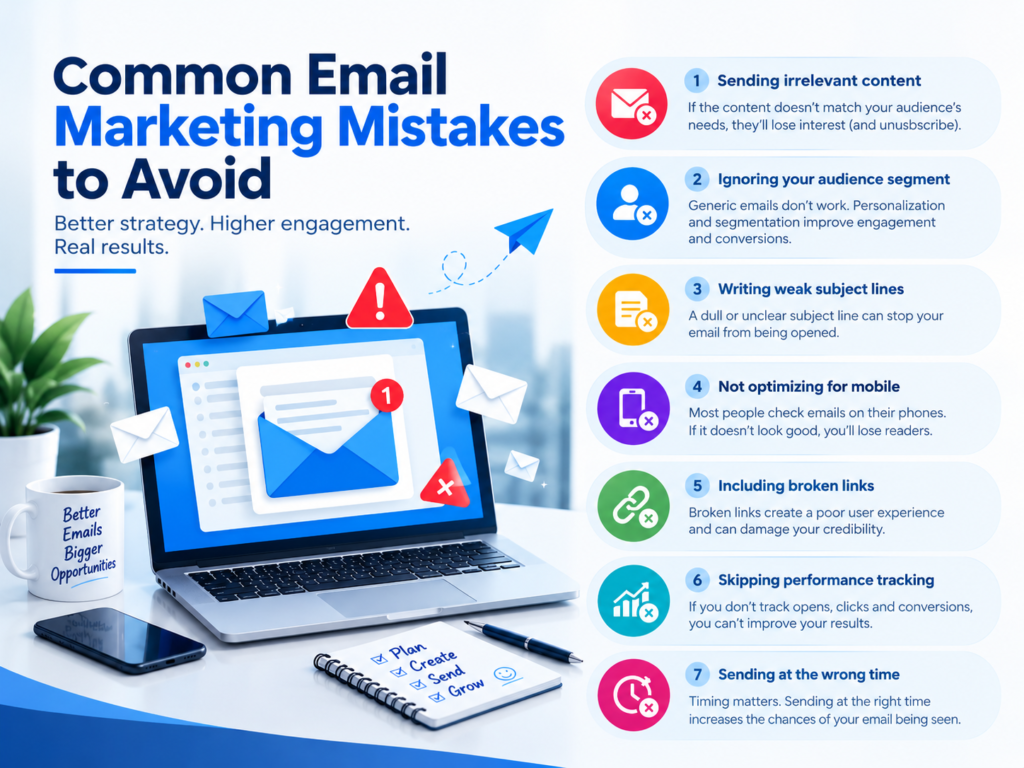
Some common mistakes can reduce the effectiveness of email campaigns.
- Sending Emails Without Permission: Always use appropriate, permission-based methods to build your subscriber list.
- Ignoring Mobile Optimization: Emails that are difficult to read on mobile devices can create a poor user experience.
- Using Unclear CTAs: Subscribers may not know what action to take if the email lacks a clear next step.
- Sending Irrelevant Content: Messages that do not match subscribers’ interests may lead to unsubscribes.
- Ignoring Campaign Metrics: Without tracking results, businesses may miss opportunities to improve their campaigns.
Avoiding these mistakes can help improve engagement and support better conversion rates.
Important Email Marketing Metrics to Track
Tracking the right metrics helps businesses understand whether their email marketing strategies are working.
Open Rate: The percentage of delivered emails that are opened, subject to how the email platform measures opens.
Click-Through Rate (CTR): The percentage of delivered emails that generate at least one tracked click, depending on the platform’s reporting method.
Conversion Rate: The percentage of recipients or email visitors who complete a desired action, according to the chosen measurement method.
Bounce Rate: The percentage of emails that could not be delivered.
Unsubscribe Rate: The percentage of subscribers who choose to stop receiving emails from a business.
Businesses should evaluate these metrics together to understand engagement, delivery, and campaign effectiveness.
Email Marketing Tips for Beginners
Beginners can start improving their email campaigns by following a few simple steps:
- Define a clear campaign goal.
- Understand the target audience.
- Create a permission-based email list.
- Write a relevant subject line.
- Keep email content simple and useful.
- Add a clear CTA.
- Test the email before sending.
- Review the results and improve future campaigns.
Starting with these steps helps beginners build a strong foundation for email marketing strategies.
Frequently Asked Questions (FAQs)
What are email marketing strategies?
Email marketing strategies are planned methods used to communicate with subscribers, promote products or services, build relationships, and encourage conversions through email campaigns.
How can email marketing increase conversions?
Businesses can improve conversions by personalizing messages, segmenting subscribers, using clear CTAs, providing valuable content, and testing different email elements.
Which Email Marketing Tools Are Best for Beginners?
Popular tools include Mailchimp, Brevo, HubSpot, and ActiveCampaign. The right tool depends on business needs, budget, and automation requirements.
How often should businesses send marketing emails?
Businesses should send emails regularly based on their audience’s interests and needs. Sending emails at the right frequency helps maintain engagement without annoying subscribers.
What is email marketing automation?
Email marketing automation uses software to send emails automatically based on subscriber actions, preferences, or predefined conditions.
Conclusion
Email marketing remains an effective way for businesses to connect with their audience and encourage meaningful actions. By using the right email marketing strategies, businesses can improve engagement, deliver relevant content, and build stronger customer relationships.
Personalization, segmentation, automation, mobile optimization, and regular campaign testing are important elements of successful email marketing strategies.
Start applying these email marketing best practices to improve your campaigns and work toward better conversion results.
Call to Action (CTA): Ready to improve your email campaigns? Start applying these strategies today and create more relevant, engaging emails for your audience.